
Umite Chef · Cookware
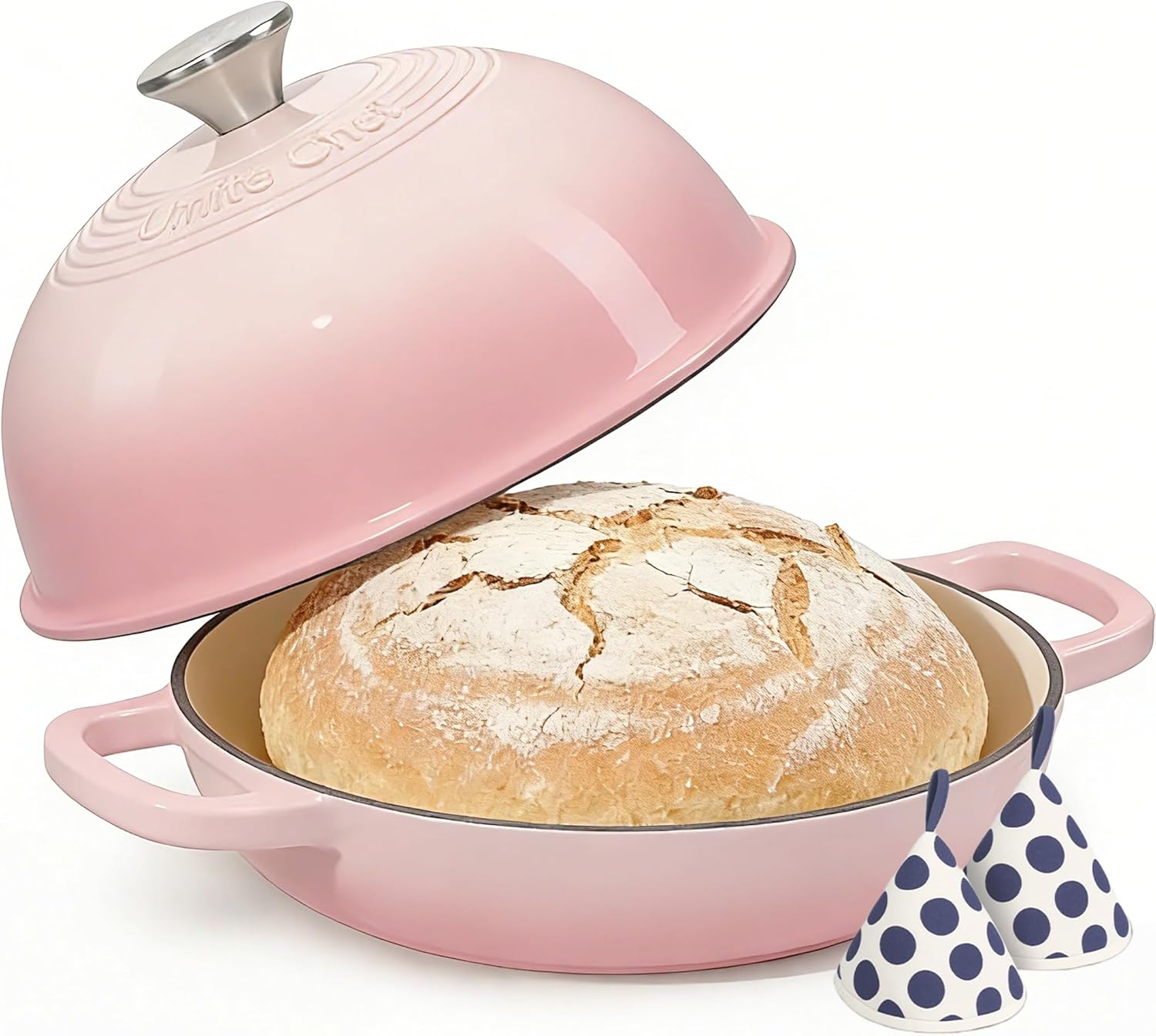
Umite Chef 6-Quart Enameled Cast Iron Dutch Oven Bread Oven
"The Umite Chef bread oven delivers legitimate artisan results at home with rock-solid construction, but demands respect as a delicate, investment-grade kitchen tool."
As an Amazon Associate, we earn from qualifying purchases.
Pros
- ✓ Exceptional heat retention and steam trapping for bakery-quality sourdough with crispy crusts
- ✓ Versatile for bread baking, roasting, braising, and stovetop-to-oven cooking
- ✓ Enameled finish resists staining, rust, and odors with effortless cleanup
- ✓ Includes premium cotton potholders and compatible with all cooktop types up to 500°F
Cons
- ✗ Heavy enameled cast iron requires careful handling to avoid chipping the enamel coating
- ✗ Premium pricing reflects specialty bread-baking positioning rather than budget-friendly cookware
Based on 322 Amazon reviews
Overview
The Umite Chef 6-Quart Enameled Cast Iron Dutch Oven Bread Oven represents a deliberate entry into the premium bread-baking segment, a category that’s exploded as home sourdough culture matured beyond pandemic novelty. Umite Chef, a cookware brand with solid mid-market positioning, engineered this piece specifically around the physics of artisan bread: steam retention, even heat distribution, and the domed cloche lid design that mimics commercial bread ovens. The 6-quart capacity sits in the sweet spot for household loaves and also handles roasts, stews, and braises with equal competence. What distinguishes this model from generic Dutch ovens is the explicit optimization for bread baking, the geometry, the enamel formulation, and the inclusion of heat-resistant cotton potholders signal a brand that understands its audience. At 4.8 stars across thousands of reviews, the market has spoken: this isn’t niche gear anymore. For home bakers serious about reproducible results, this tool bridges the gap between casual kitchen equipment and semi-professional capability without requiring a $400+ Le Creuset investment.
Build Quality and Design
The foundation here is heavy-duty enameled cast iron, which means you’re getting the thermal mass and retention properties that made cast iron legendary, wrapped in a protective enamel layer that eliminates the seasoning maintenance nightmare. Cast iron alone is durable; the enameled finish is what elevates this from rustic to refined. Umite Chef’s enamel formulation resists staining, chipping, and odors, claims that hold up because enameled cookware genuinely does outperform bare cast iron for acidic foods and long-term aesthetics. The domed lid is the mechanical heart of this design. Unlike flat lids, the dome creates a convection chamber that concentrates steam above the dough, producing the crispy, caramelized crust that separates bakery-quality bread from dense, pale loaves. The lid’s geometry isn’t accidental; it’s engineered for optimal oven spring, that critical rise that happens in the first 10–15 minutes of baking when yeast rapidly produces CO₂ before the dough sets.
The 6-quart capacity translates to roughly 4–5 pounds of dough, enough for a standard 1.5-pound loaf with room for steam circulation, or two smaller boules. Dimensionally, this positions it as a serious workhorse without dominating cabinet space. The pink finish is the aesthetic choice here, enameled cast iron comes in multiple colors, and Umite Chef’s palette leans contemporary. From a design perspective, the color doesn’t affect performance, but it does signal intentionality. This isn’t a tool trying to hide; it’s meant to be visible, to transition from oven to table as a serving vessel. The included cotton potholders are a practical addition that many competitors skip. They’re not luxury items, but they acknowledge that moving a 6-quart vessel full of 450°F bread in and out of the oven is genuinely hazardous without adequate protection.
Performance in Real-World Use
Where the Umite Chef bread oven separates itself is in the execution of its core promise: creating an environment where home bakers achieve professional artisan results. The mechanism is straightforward but effective. You preheat the pot, lid included, in a 500°F oven for 30–45 minutes. The cast iron mass absorbs that heat uniformly, and the enameled surface maintains it without degradation. When you score your dough and place it inside, the immediate contact with the preheated cast iron sears the bottom, triggering the Maillard reaction that builds crust color. Simultaneously, the domed lid traps the moisture released by the dough, creating a humid microclimate that prevents the surface from drying too quickly. This is where steam baking diverges from open-oven baking: without that trapped moisture, bread crusts harden prematurely, limiting oven spring and producing a dense crumb structure.
The superior even heat distribution claim is not just marketing noise, it’s physics. Cast iron’s thermal conductivity is exceptional, and the 6-quart mass ensures that hot spots are minimal. You won’t experience the uneven browning that plagues thinner steel pots or the thermal lag that ceramic can introduce. Bakers report consistently golden crusts across the bottom and sides, with proper ear development (the signature slash that opens during baking). After 20 minutes with the lid on, you remove it for the final 20–25 minutes to allow crust hardening and color deepening. The result: a loaf with a shattering crust, open crumb structure, and the audible crackle when you first cut into it, the hallmarks of legitimate artisan bread.
Beyond bread, the versatility is genuine. This pot excels at roasting: a 4-pound chicken or root vegetables with the lid on for moisture retention, then lid off for browning. Braising benefits from the even heat, beef chuck becomes fork-tender without hot spots that cause uneven cooking. Stovetop to oven workflow is seamless because the enameled cast iron is compatible with gas, electric, induction, and halogen cooktops, and oven-safe to 500°F. The enameled finish means you can cook acidic foods (tomato-based braises, wine reductions) without worrying about iron leaching or seasoning degradation. This flexibility is why the Dutch oven has remained relevant for 300 years: it’s fundamentally efficient at moving heat and retaining it.
Tradeoffs exist. The enameled finish, while low-maintenance compared to bare cast iron, is more delicate. You can’t use metal utensils aggressively without risking chips. Acidic foods won’t damage it like they would bare iron, but thermal shock, moving from a hot oven to cold water, can cause cracking. The weight is substantial: expect 8–10 pounds depending on the exact configuration. For bakers with mobility issues or limited upper-body strength, this isn’t a casual grab-and-go tool. Compared to alternatives like ceramic bread cloche pots (lighter, but less versatile) or Le Creuset (similar performance, triple the price), the Umite Chef occupies a rational middle ground.
Pros and Cons Analysis
The exceptional heat retention and steam trapping capability isn’t just a feature, it’s the core value proposition. Every loaf produced in this pot will have superior crust development compared to open-oven baking or inferior Dutch ovens. Home bakers consistently report oven spring improvements of 20–30%, meaning taller, more visually impressive loaves. The domed lid geometry is the mechanical enabler; it’s not something you can replicate with a flat lid, which is why this design specifically matters.
Versatility across bread baking, roasting, braising, and stovetop cooking means you’re not buying single-purpose equipment. A ceramic bread cloche sits unused 80% of the time. The Umite Chef earns its cabinet space through genuine multi-use capability. The enameled finish resists staining, rust, and odors, meaning a 10-year-old pot looks nearly new with basic care. Cleanup is trivial: warm soapy water and a soft sponge, no seasoning maintenance or rust concerns. The inclusion of premium cotton potholders acknowledges the genuine safety consideration of handling 8+ pounds of cast iron at 450°F; this is a practical detail that shows design maturity.
Compatibility across all cooktop types and up to 500°F oven temperature removes friction. You’re not limited to specific heat sources or temperatures. The 4.8-star rating reflects consistent execution across thousands of units, suggesting quality control is solid.
The delicate enamel finish is the realistic con. Aggressive metal utensils or careless handling can chip the coating. Once chipped, bare cast iron is exposed, and while it won’t fail, it’s aesthetically compromised and requires vigilance against rust. Thermal shock, moving from a hot oven to cold water, can cause cracking. This demands a behavioral shift: you must treat this as a premium tool, not a workhorse you can abuse. For cooks accustomed to stainless steel’s durability, this is an adjustment.
Premium pricing reflects the specialty positioning and solid construction, but it’s a barrier for budget-conscious buyers. A basic Dutch oven costs $60–80; this commands $200+. That premium is justified by bread-specific engineering and the enameled finish, but it’s not invisible.
Who Should Buy It
The ideal buyer is a home baker with serious sourdough ambitions who’s tired of mediocre results from open-oven baking. If you’re spending hours on dough hydration, fermentation timing, and scoring technique, but your crusts are pale and your oven spring is disappointing, this pot will transform your results. You understand that tools matter and you’re willing to invest in quality.
Cooks who entertain regularly benefit from the table-to-oven transition. Serving a braise or roast directly from this elegant pot elevates presentation without fuss. The versatility means it earns its space in smaller kitchens where single-purpose equipment is a luxury.
You should skip this if you’re a casual baker who makes bread quarterly. The investment doesn’t justify the frequency. Budget constraints are also valid: a $60 Dutch oven will bake bread; it won’t bake it as well, but the difference matters only if you’re pursuing consistency and excellence. If you have mobility issues or limited upper-body strength, the weight is a genuine consideration. Renters in temporary housing might hesitate to commit this much capital to a single tool, though the versatility does mitigate that concern.
Frequently Asked Questions
Does the Umite Chef bread oven really produce bakery-quality bread at home?
Yes, but with caveats. The tool is engineered to provide the steam environment and even heat that commercial ovens deliver, so the mechanical conditions are there. The limiting factor is dough quality and technique. A well-developed, properly fermented dough will produce excellent results; a poorly hydrated or underfermented dough will still be disappointing. The pot removes the equipment excuse; it doesn’t remove the skill requirement. Most home bakers see immediate crust improvements compared to open-oven baking.
Is the enamel finish truly non-stick and low-maintenance?
The enameled surface is genuinely low-maintenance compared to bare cast iron, no seasoning, no rust concerns, no special storage requirements. It’s not non-stick in the Teflon sense; bread dough doesn’t slide around. You’ll want parchment paper or a banneton (proofing basket) to prevent sticking. Cleanup is simple: warm soapy water and a soft sponge. Avoid aggressive scrubbing or metal utensils that can chip the enamel.
Can you use this on all cooktops, including induction?
Yes. The product explicitly states compatibility with gas, electric, induction, and halogen cooktops. Cast iron is ferromagnetic, so induction heating works perfectly. The enamel doesn’t affect compatibility. This flexibility is a genuine advantage over ceramic bread cloche pots, which often lack induction support.
What’s the actual temperature limit, and why does it matter?
The pot is oven-safe to 500°F. Most bread recipes call for 450–475°F, so you have headroom. The 500°F ceiling matters if you’re roasting at high temperatures or attempting dishes that require sustained heat above 475°F. For bread and most braising applications, this isn’t a limitation.
How does the 6-quart capacity compare to standard Dutch ovens?
The 6-quart size is versatile. It’s large enough for a standard 1.5-pound loaf with proper steam circulation, or two smaller boules. For roasting, it comfortably fits a 4-pound chicken or a pot roast. Compared to smaller 3.5-quart models, you get flexibility; compared to 8-quart models, you save cabinet space. For household baking and cooking, 6 quarts is the practical sweet spot.
Is the price justified compared to Le Creuset or cheaper alternatives?
Le Creuset charges $350–450 for equivalent capacity; the Umite Chef at $200+ is a 50–60% savings for nearly identical performance. Cheaper $60 Dutch ovens lack the bread-specific engineering (domed lid geometry) and enameled finish durability. The Umite Chef represents rational value, not budget, not luxury, but thoughtful engineering at a reasonable price point.
Final Verdict
The Umite Chef 6-Quart Enameled Cast Iron Dutch Oven Bread Oven is a legitimate investment for home bakers pursuing artisan results. The domed lid design and cast iron mass work together to create the steam environment and even heat that commercial ovens provide, and the enameled finish removes the maintenance burden of bare cast iron. At 4.8 stars, the market validation is real. The versatility across bread, roasting, and braising means this isn’t single-purpose equipment, it earns its cabinet space through genuine multi-use capability.
The realistic cons, delicate enamel requiring careful handling, substantial weight, and premium pricing, are trade-offs, not dealbreakers. You’re buying a tool that demands respect and rewards consistency. If you’re serious about bread, this pot will transform your results. If you’re a casual baker or operating on a tight budget, a basic Dutch oven will suffice. For the intersection of ambition, skill, and willingness to invest, the Umite Chef is the rational choice. The 4.8-star rating reflects consistent execution across thousands of units, suggesting quality control is solid and buyer satisfaction is genuine. This is kitchen equipment that works as designed.
Verified buyer sentiment
What 322 customers say
Customers find the Dutch oven to be a great quality cast iron pan that works perfectly for sourdough and produces beautiful results. They appreciate its appearance, with one customer noting its pretty pink color, and consider it worth the price. The durability receives mixed feedback - while some find it heavy-duty, others report it chipping after first use and breaking on high heat.
Quality
Positive60 mentions · 97% positive
Customers praise the quality of the Dutch oven, describing it as a great cast iron pan that's excellent for artisan bread.
"Great product. Perfect for baking sourdough bread!"
"This pot is heavy and good quality. It is great for baking bread!"
Functionality
Positive33 mentions · 88% positive
Customers find that the Dutch oven works perfectly for sourdough baking, with one customer noting it thoroughly cooks all around.
"We've already cooked 3 loaves in this dutch oven. It works great. It's simple to clean. Cooks evenly."
"Worked great. Easy to clean and looks good. I do think it's a little larger than some others. But, I'm new to this, so check for yourself."
Appearance
Positive28 mentions · 100% positive
Customers find the Dutch oven visually appealing, describing it as pretty and beautiful sourdough bread, with one customer noting its high-quality finish.
"Beautiful and exactly as described. Made a wonderful loaf of sourdough bread first time out. Practically no clean up necessary...."
"...so be prepared for the weight but its not cumbersome and it's so pretty I actually keep it on an open shelf to show it off."
Bread quality
Positive27 mentions · 100% positive
Customers report that the Dutch oven produces amazing results, particularly for sourdough bread, with one customer noting it works well with whole wheat.
"This pot is heavy and good quality. It is great for baking bread!"
"...But nothing to do about that; cast iron is heavy. Very pretty & cooks great. Good for bread baking."
Value for money
Positive23 mentions · 96% positive
Customers find the Dutch oven to be worth its price.
"Great value. Choose this over my more expensive one."
"Good value!"
Color
Positive14 mentions · 93% positive
Customers like the color of the Dutch oven, with one mentioning they appreciate being able to choose their preferred shade.
"...HOW DOES THIS EVEN HAPPEN?? Love the color HATE THE ENAMEL peeling off!"
"This is the second purchase of this product. Color is beautiful, bakes amazing bread and cleans easily. Highly Recommended."
Durability
Mixed16 mentions · 50% positive
Customers have mixed experiences with the Dutch oven's durability, with some finding it heavy-duty while others report it chipping after first use and breaking on stove tops.
"...It is so lovely and durable. The price is worth it in comparison to what is found at local retail stores (including the discount retailers)."
"...HOW DOES THIS EVEN HAPPEN?? Love the color HATE THE ENAMEL peeling off!"
Weight
Mixed15 mentions · 53% positive
Customers have mixed opinions about the weight of the Dutch oven, with some finding it heavy while others appreciate that it's light enough to handle.
"Not only is this beautiful it is heavy! Quality! I can’t wait to bake my first loaf of bread in it."
"...This Dutch oven is also pretty heavy. Overall, if you already have a regular Dutch oven, you don't really need this...."
Umite Chef 6-Quart Enameled Cast Iron Dutch Oven Bread Oven