
Best Food Containers
Airtight containers and sets tested for seal quality, stackability, and durability.
10 reviews
Category Overview
What to know about food containers
Food storage containers solve three problems: keeping food fresh, surviving repeated dishwasher and microwave use, and stacking without collapsing the fridge shelf. The three material categories are glass (Pyrex, Anchor Hocking), BPA-free plastic (Rubbermaid Brilliance, OXO Pop, Snapware), and silicone (Stasher). Glass wins on everything except weight and cost; it doesn't stain, doesn't absorb odors, goes from freezer to microwave to dishwasher, and lasts forever.
Plastic is lighter and cheaper but eventually yellows from tomato sauce and turmeric, and many lid gaskets fail within a couple years. Silicone bags are the new category for freezer storage, sous vide, and liquid leftovers; they collapse flat for storage and handle extreme temperatures. Lid design is often what separates a great container from an okay one.
Snap-lock lids (Rubbermaid Brilliance) seal fully airtight. Screw-top lids (glass Pyrex) are even more secure but slower to use. The cheap snap-on lids that come with many sets are the weak link.
We tested each set on real-world conditions: 30-day fridge storage of cooked rice, 60-day freezer storage of tomato soup, 50-cycle dishwasher abuse, and a drop test from waist height. Rankings weigh seal integrity, stain resistance, stacking design, and long-term durability.
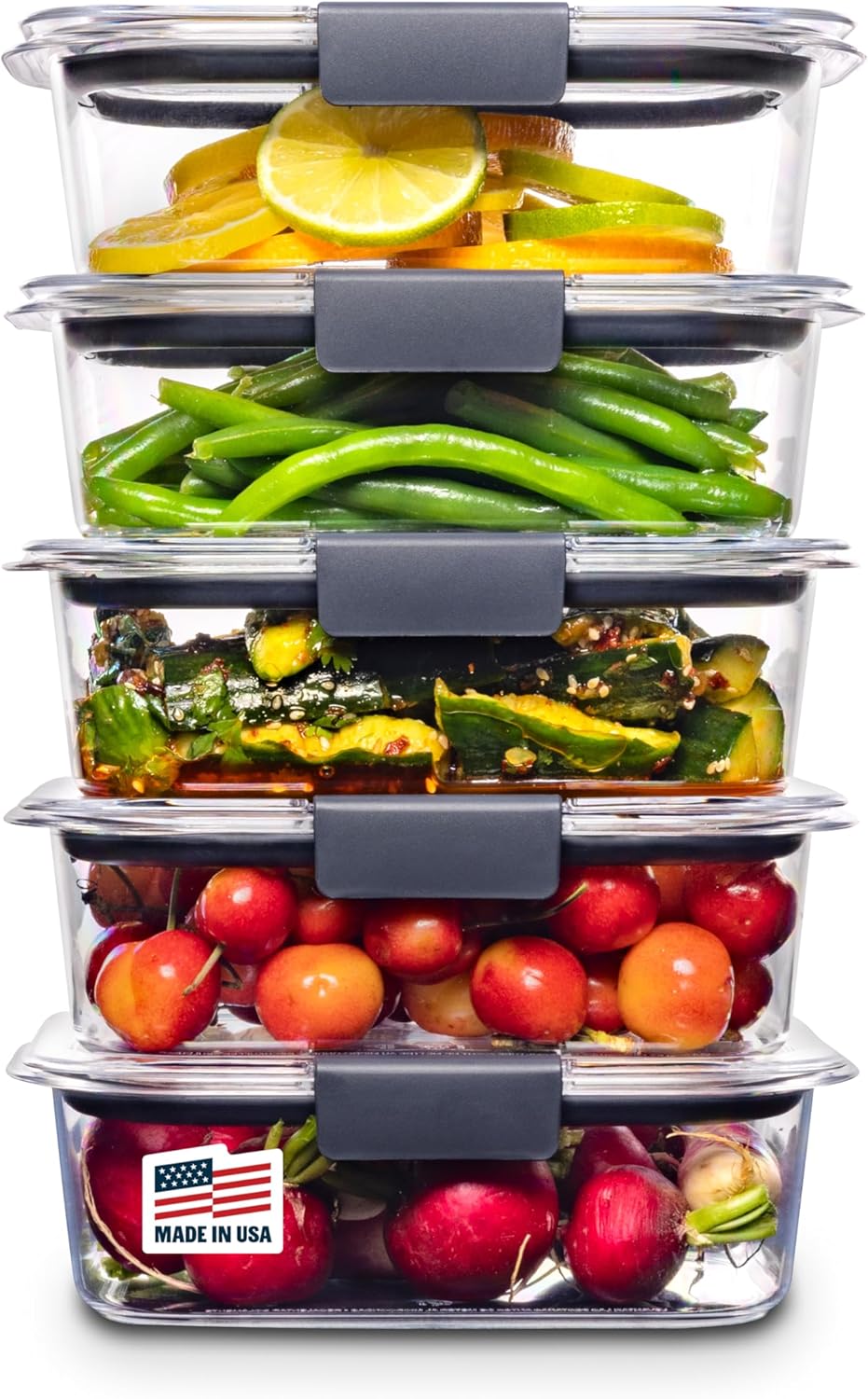
Rubbermaid
Rubbermaid Brilliance Tritan 3.2-Cup Food Storage Containers
Check price
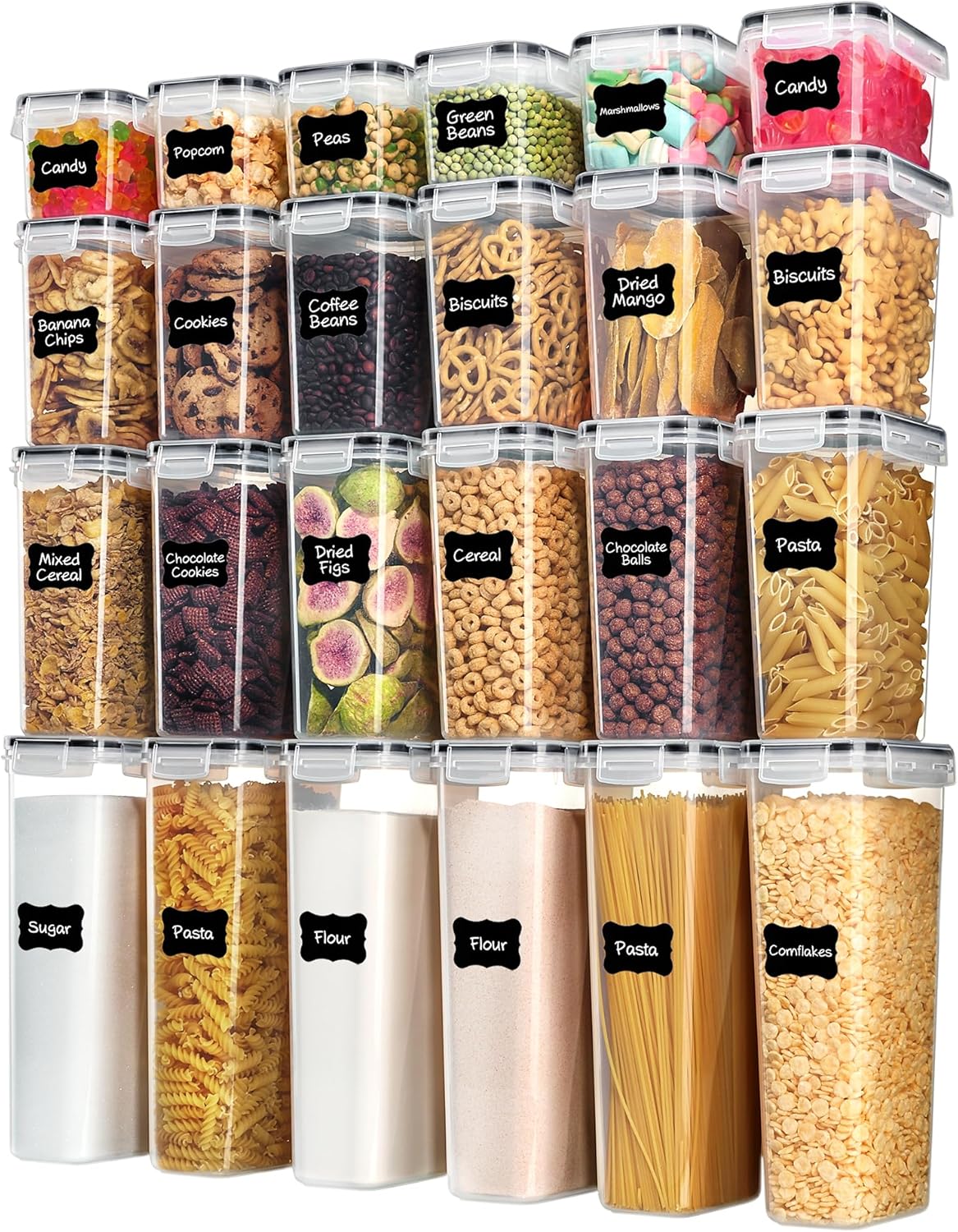
Vtopmart
Vtopmart 24-Piece Airtight Food Storage Containers Set
Check price
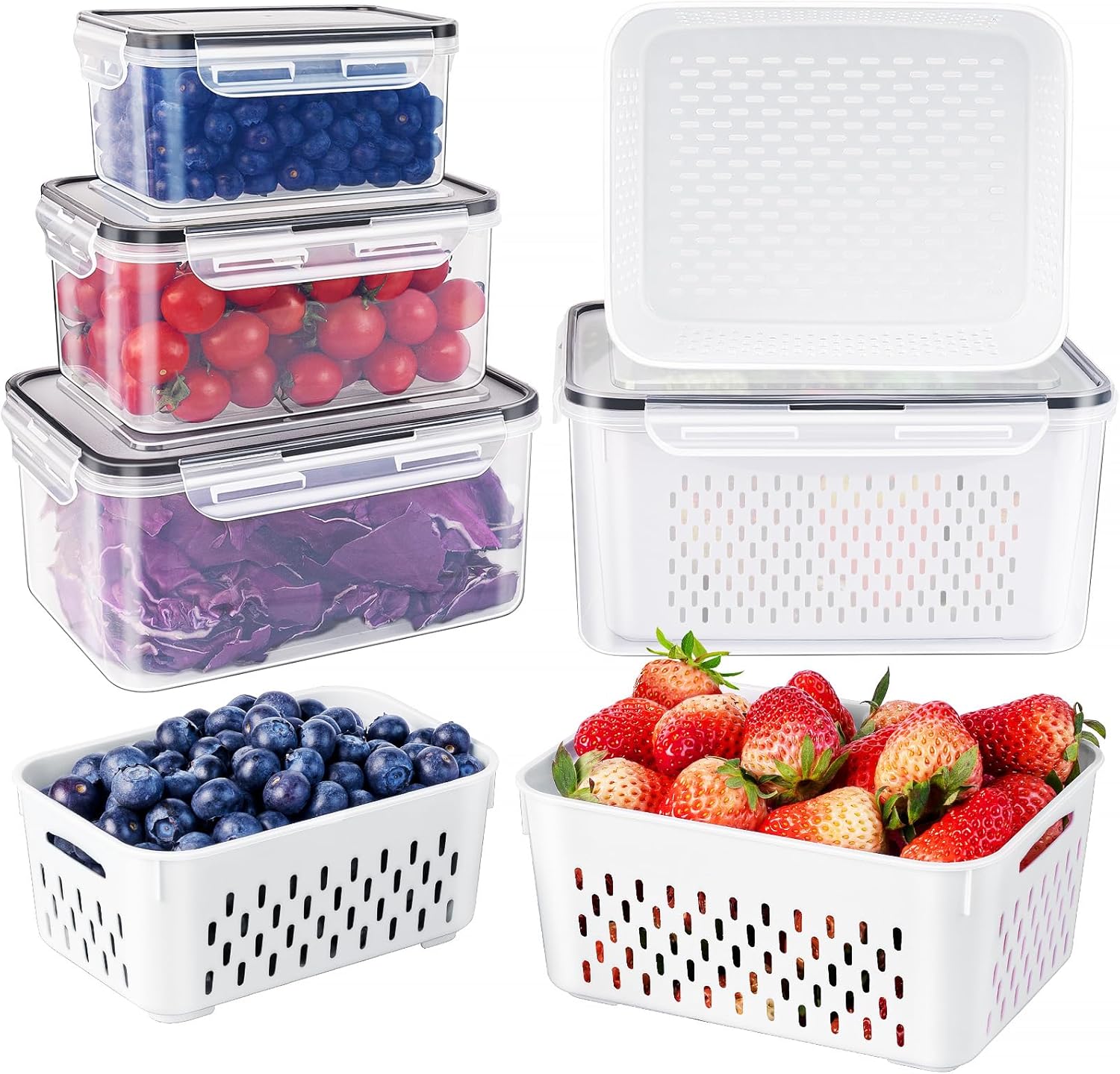
Freshmage
Freshmage Fruit Storage Containers 4-Piece Set with Colander
Check price
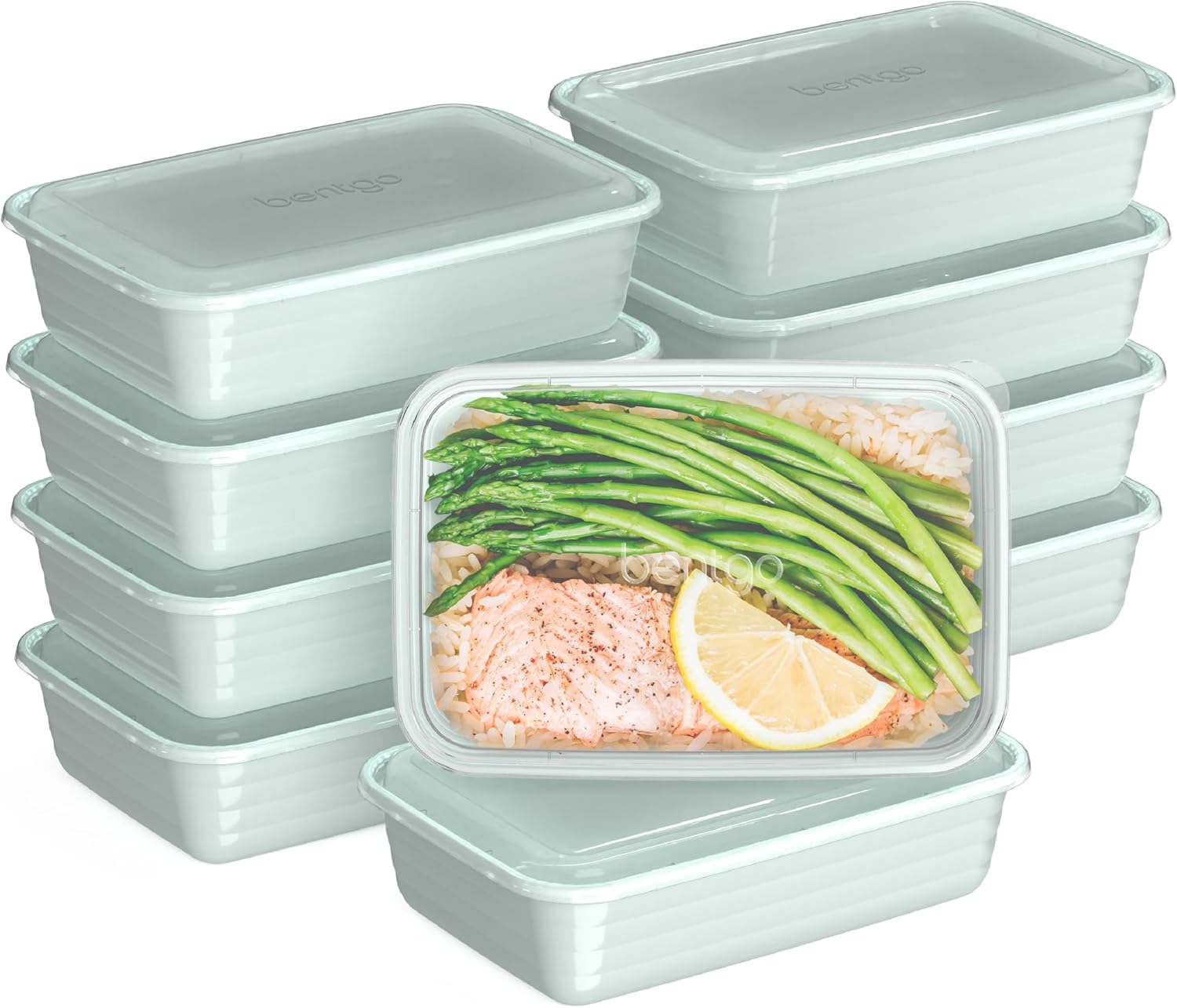
Bentgo
Bentgo Prep 20-Piece Meal Prep Containers
Check price
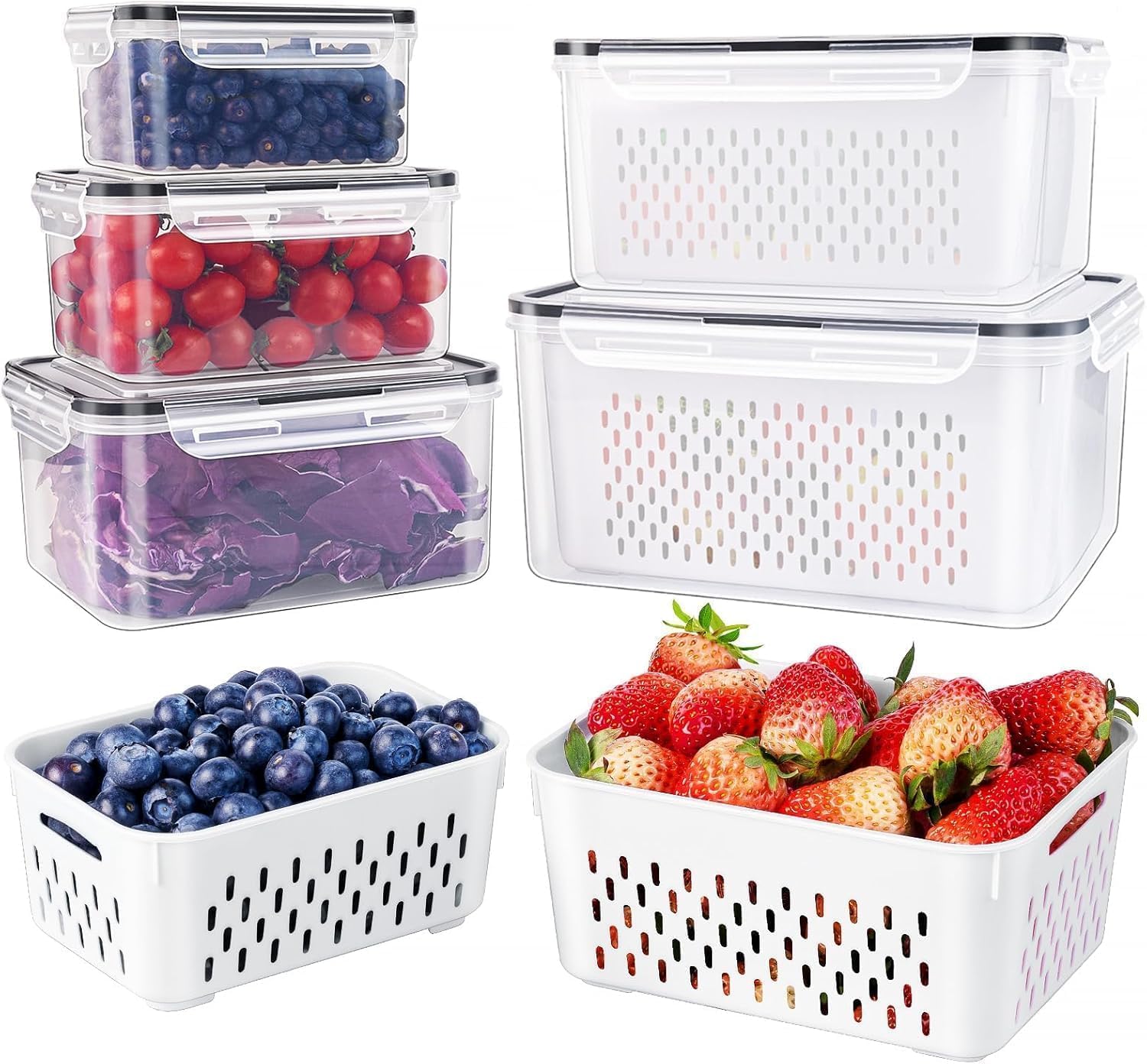
Freshmage
Freshmage 5-Piece Produce Container Set with Colander
Check price
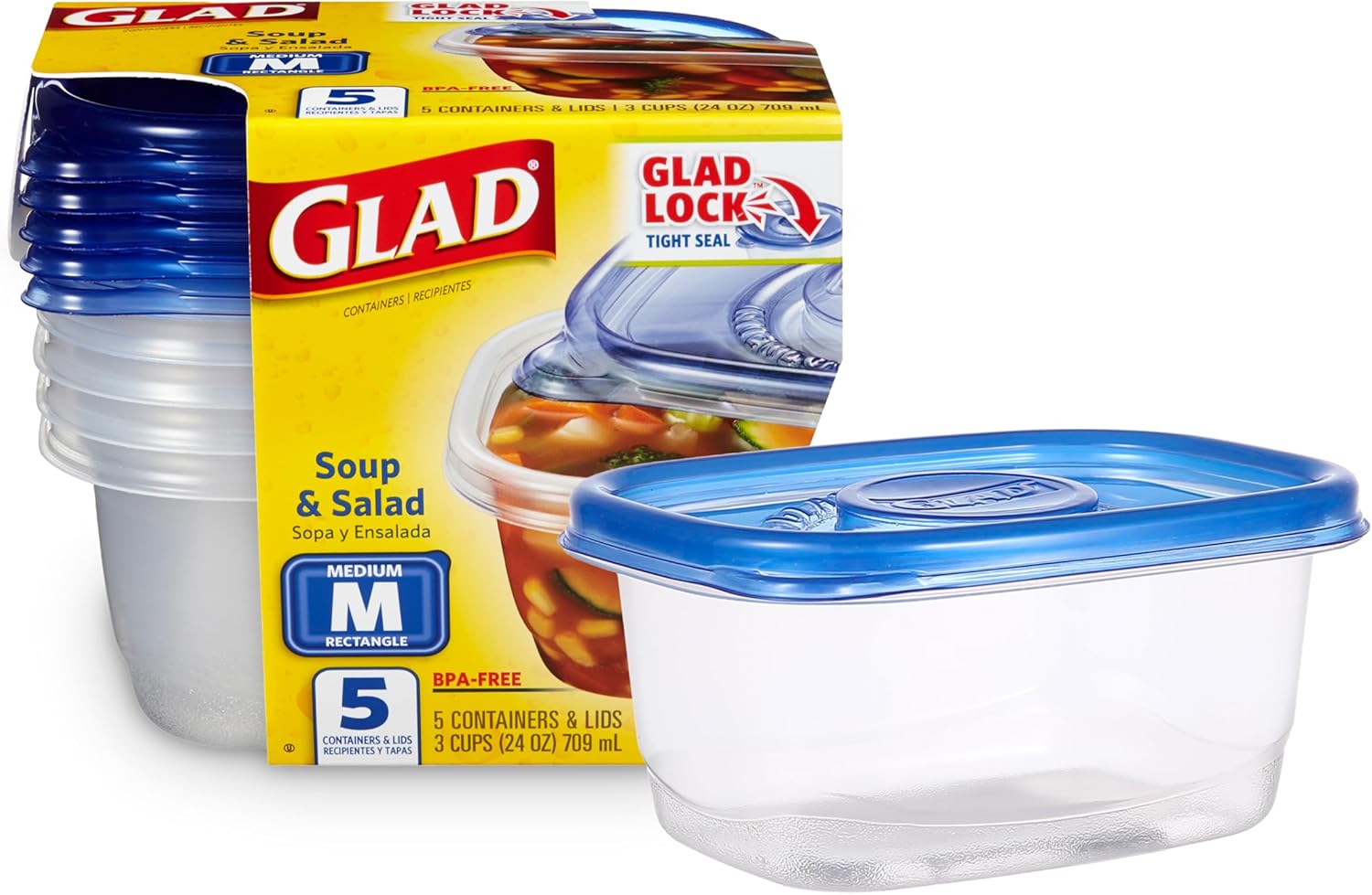
Glad
Glad GladWare Medium Rectangle 24oz Food Storage Containers
Check price
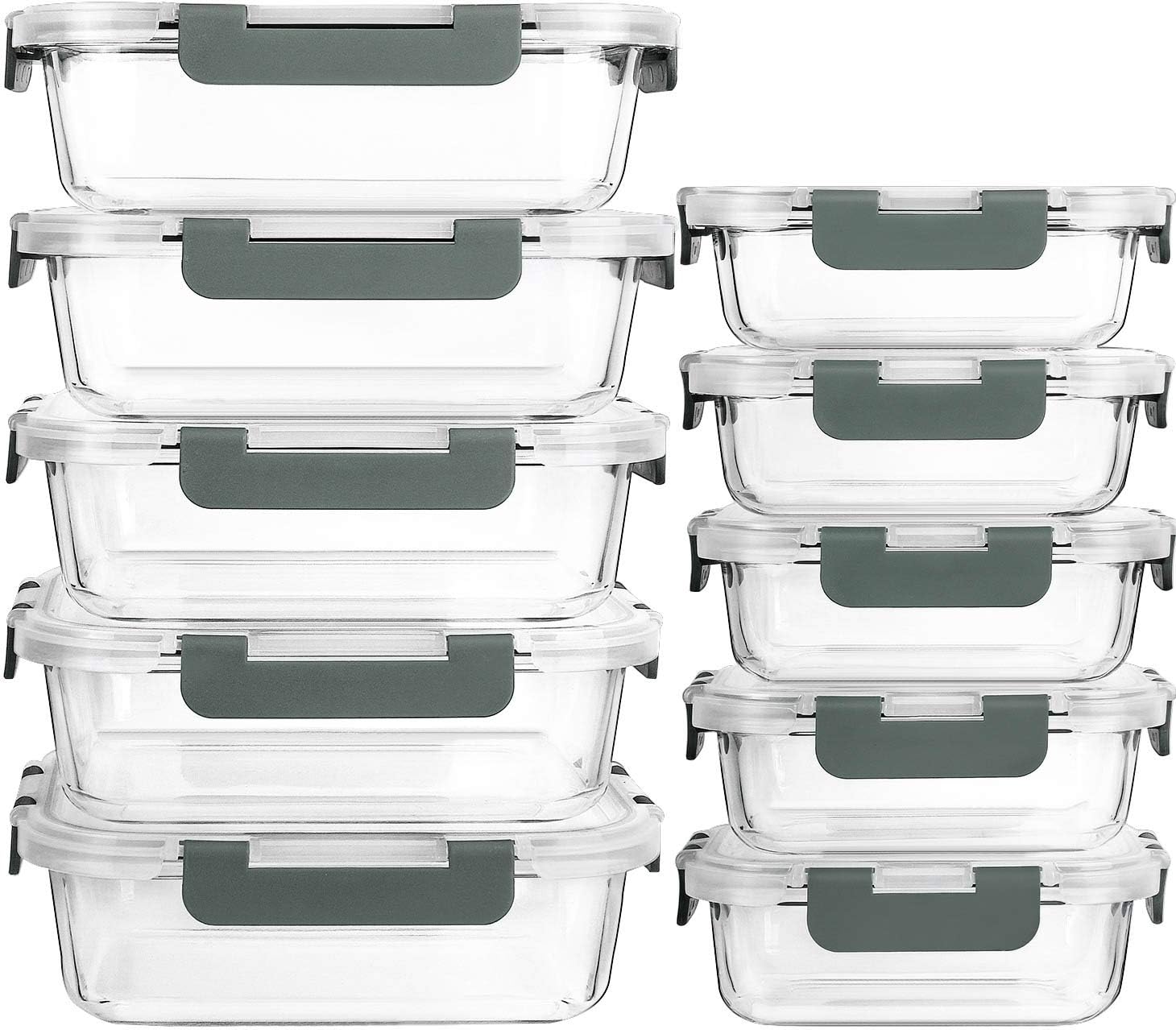
MCIRCO
MCIRCO 10-Pack Glass Meal Prep Containers with Locking Lids
Check price
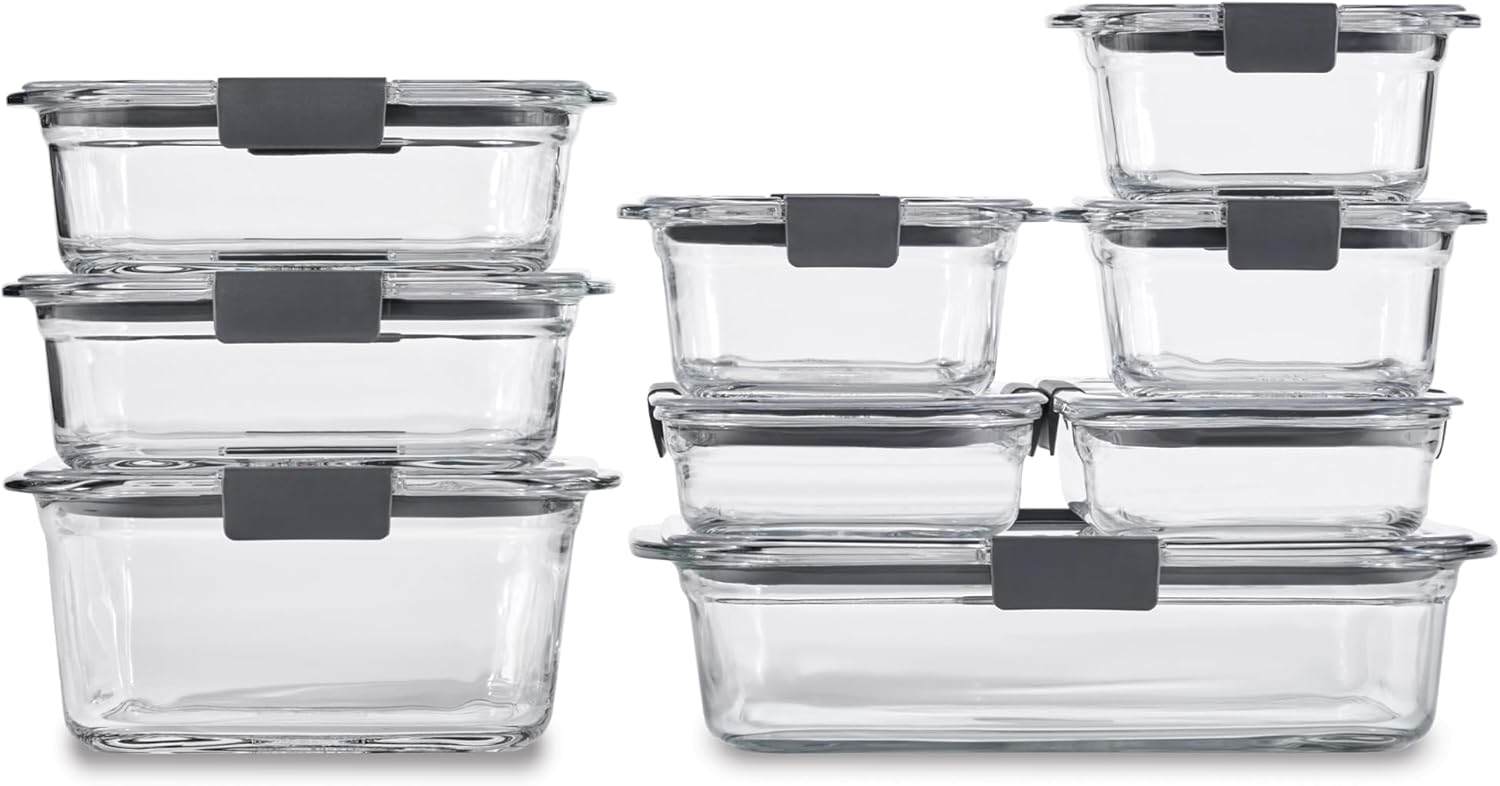
Rubbermaid
Rubbermaid Brilliance Glass Food Storage Containers, 9-Piece Set
Check price
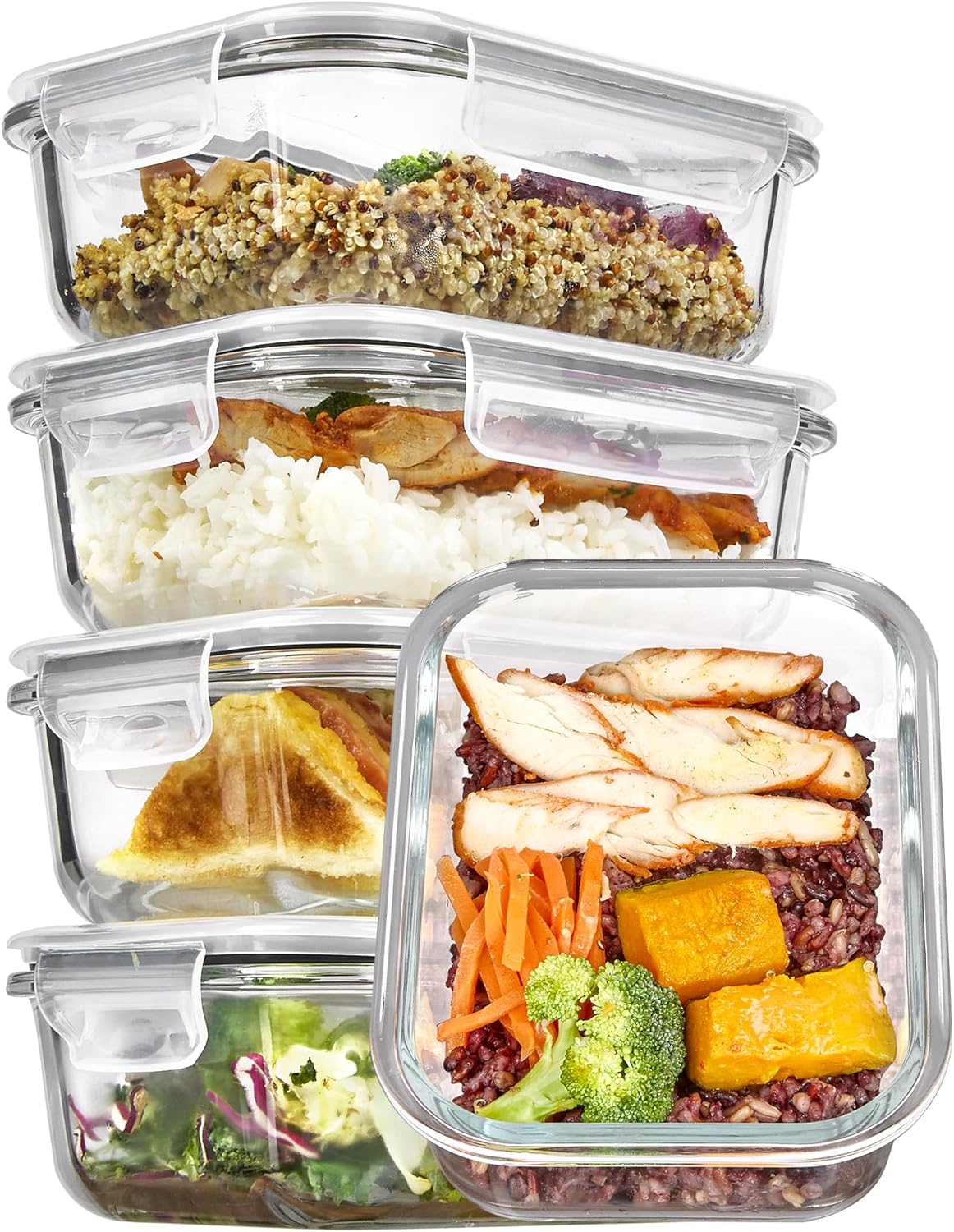
Vtopmart
Vtopmart 5-Pack 22oz Glass Storage Containers with Airtight Lids
Check price
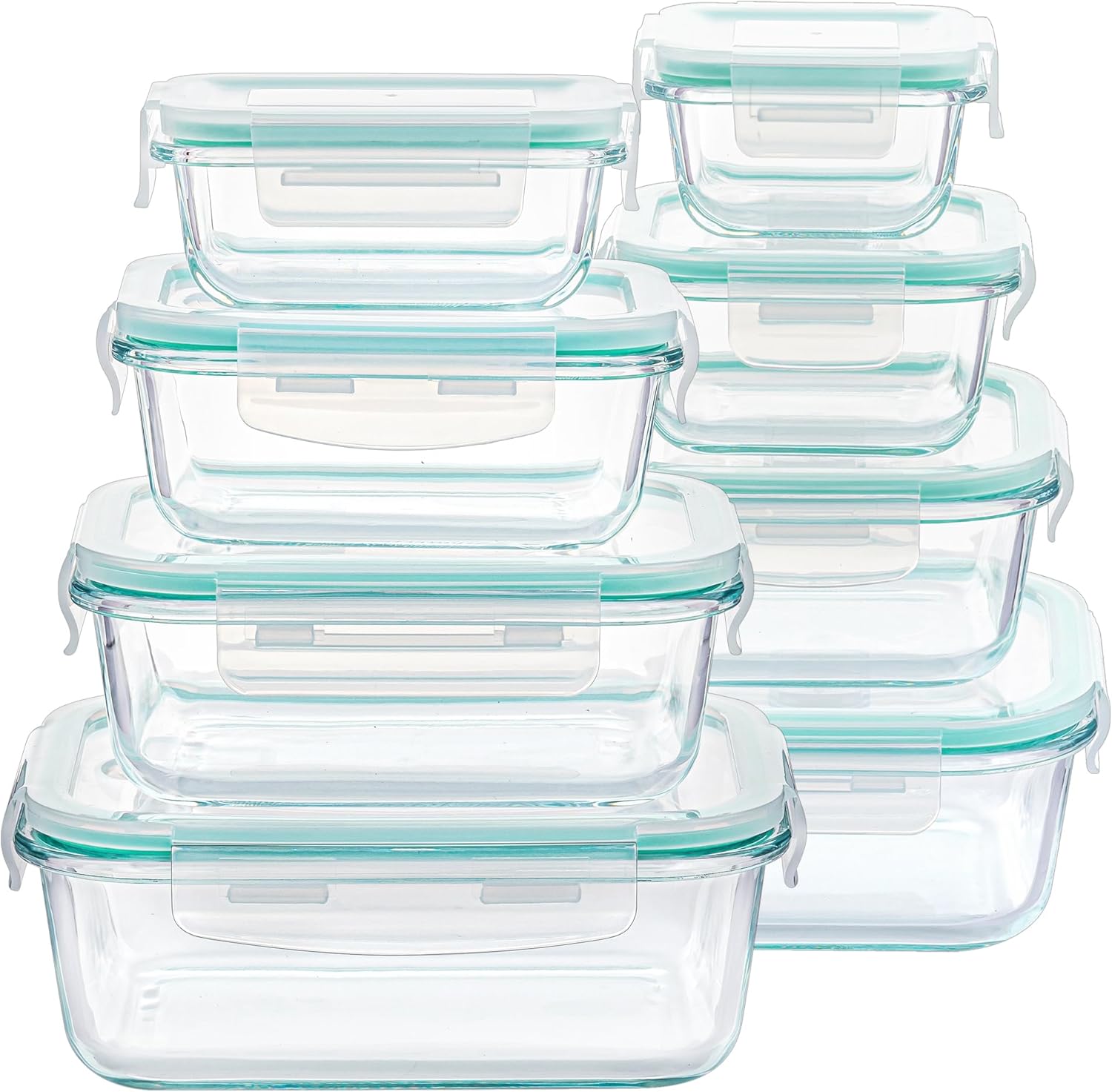
Vtopmart
Vtopmart 8-Pack Glass Food Storage Containers with Airtight Lids
Check price
Frequently asked questions
Glass or plastic food containers?
Glass for long-term freshness, no staining, no odor absorption, and long life. Plastic for portability, lower weight, and lower cost. Good modern plastic (Rubbermaid Brilliance) seals as well as glass for a while.
Are silicone food storage bags safe in the freezer?
Yes. Platinum-cure silicone (Stasher, Zip Top) is food-safe from -40°F to 450°F and doesn't leach chemicals at extreme temperatures. They're the best choice for freezing liquids flat.
How many food containers do I actually need?
For a typical household, about 10 to 12 matched containers across three sizes (1 cup, 3 cup, 7 cup). More turns the cupboard into a lid graveyard fast.