
Best Knife Blocks & Sets
Kitchen knife sets and blocks tested for sharpness, balance, and edge retention.
10 reviews
Category Overview
What to know about knife blocks & sets
A kitchen knife set solves the wrong problem for most home cooks; the real problem is owning three excellent knives, not owning fifteen mediocre ones. The three that matter are a chef's knife (8 inch, the daily driver), a paring knife (3 to 4 inch, for peeling and small work), and a serrated bread knife (8 to 10 inch, for crusty loaves and tomatoes). Everything else is a luxury.
That said, when a block set is done well; matched steel, reasonable curation, a proper sharpening steel; it saves money and looks great on the counter. German knives (Wüsthof, Henckels) use softer steel that's easier to sharpen and resists chipping; Japanese knives (Shun, Global, Miyabi) use harder steel that holds an edge longer but demands careful use. Full-tang construction (the blade steel extends the full length of the handle) is a non-negotiable for anything you'll use daily.
Avoid the 18-piece mega-sets with steak knives and shears; they pad the count with stamped fillers. We tested each block set on tomato skin, a full butternut squash, cold butter, and a dense loaf of sourdough. Rankings weigh edge retention, ergonomic balance, materials, block design, and value per included piece.
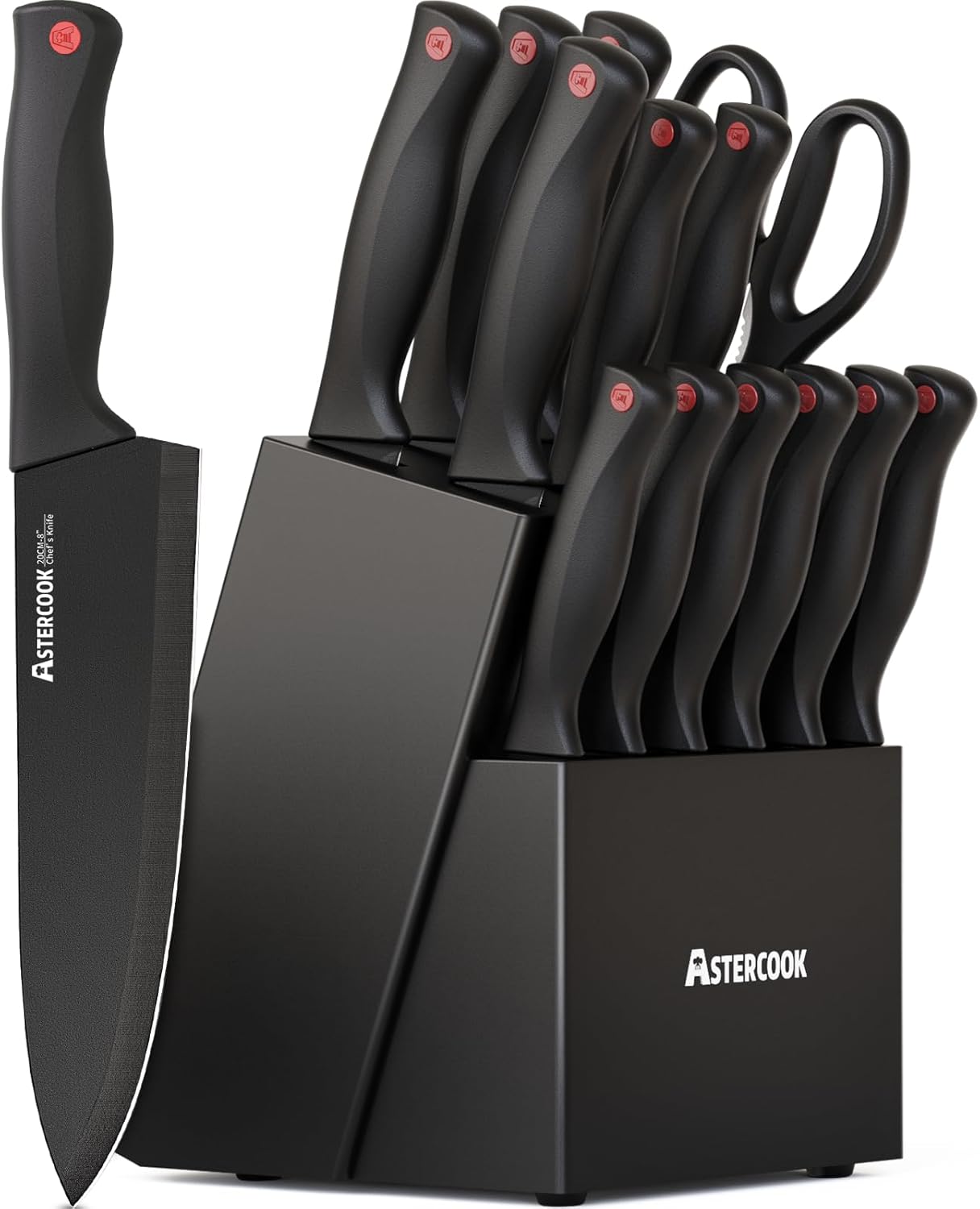
Astercook
Astercook 15-Piece Knife Set with Built-in Sharpener Block
Check price
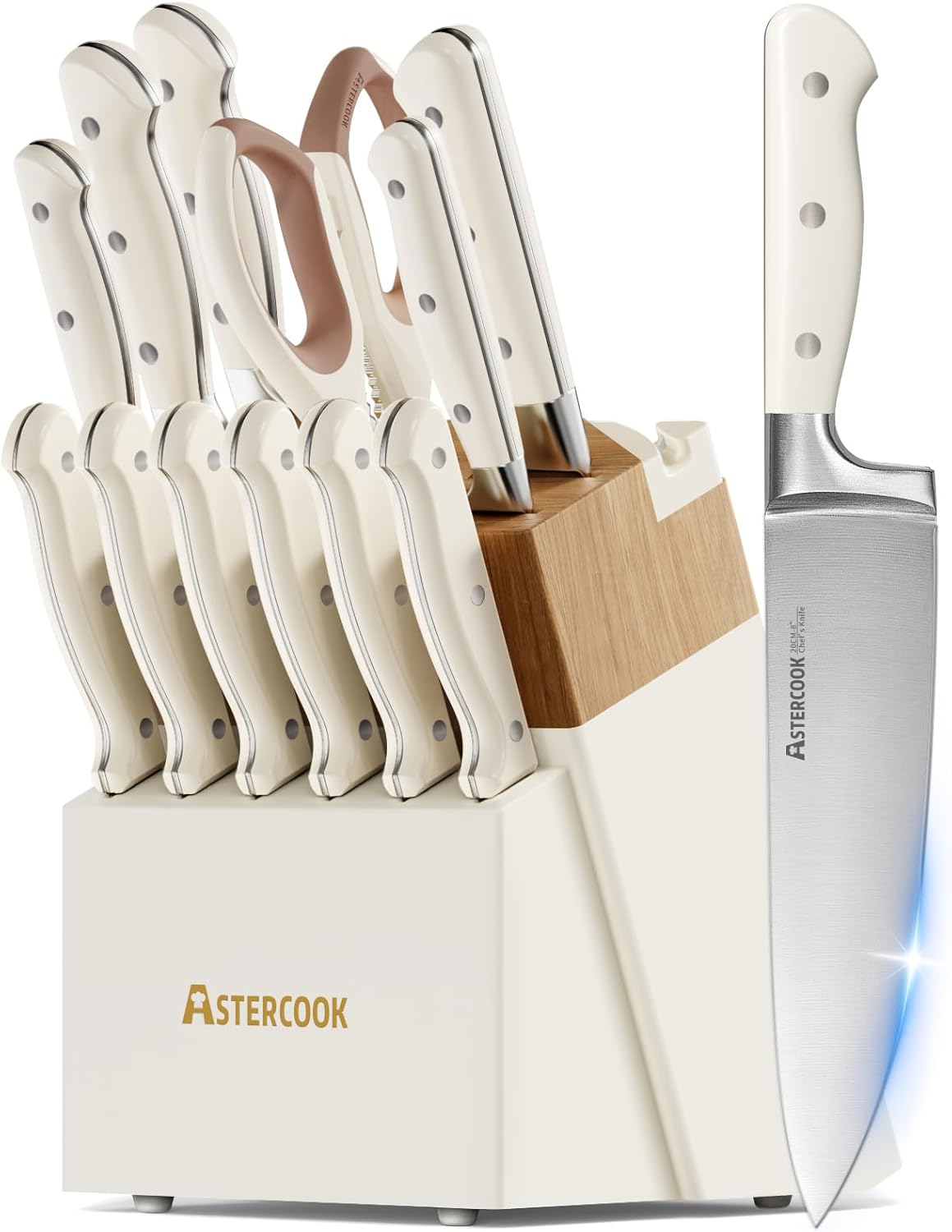
Astercook
Astercook 14-Piece Knife Set with Block and Sharpener
Check price
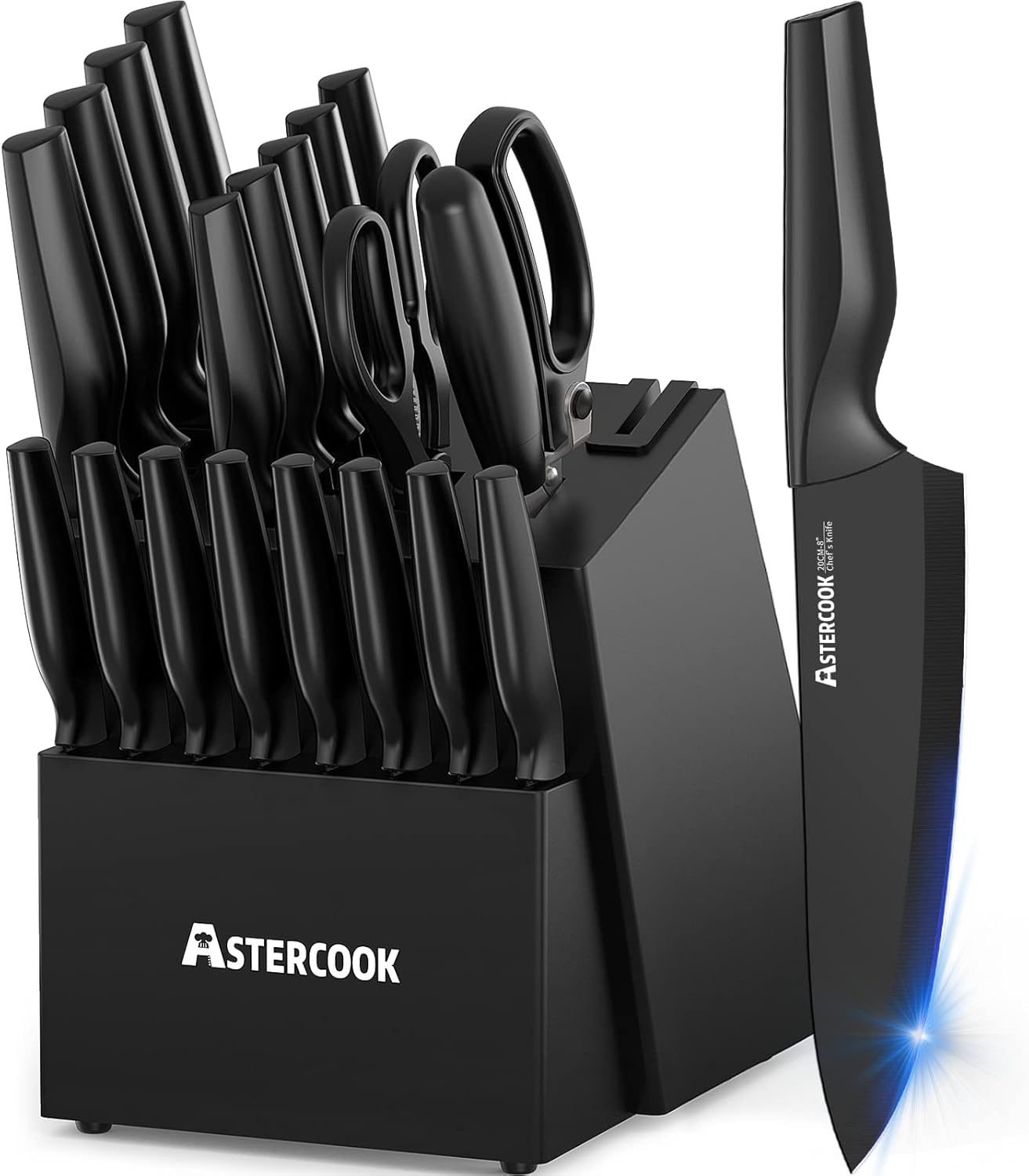
Astercook
Astercook 21-Piece Knife Set with Block and Built-in Sharpener
Check price
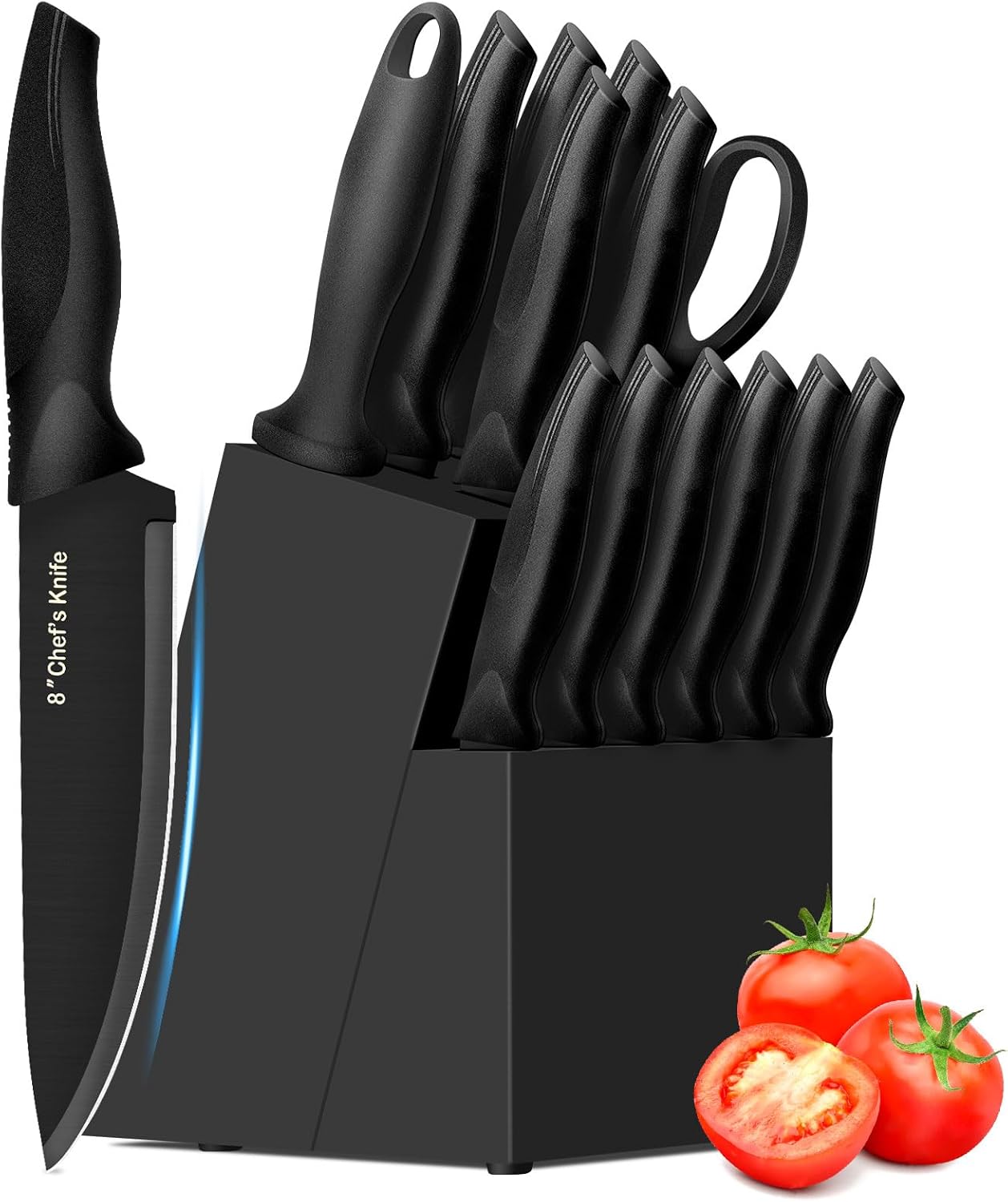
XANAPON
XANAPON 14-Piece German Stainless Steel Knife Set with Block
Check price
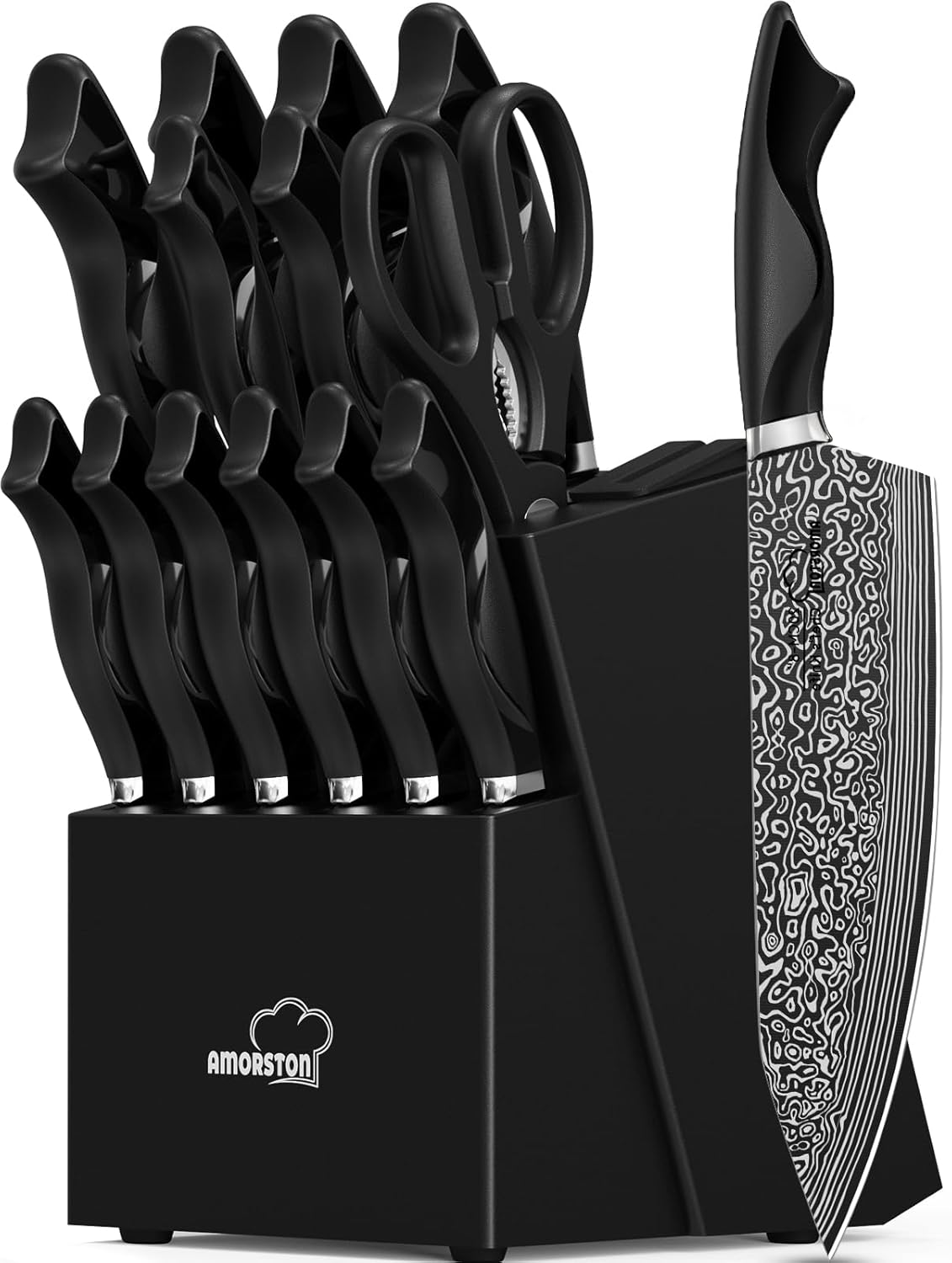
Amorston
Amorston 15-Piece German Stainless Steel Knife Block Set
Check price
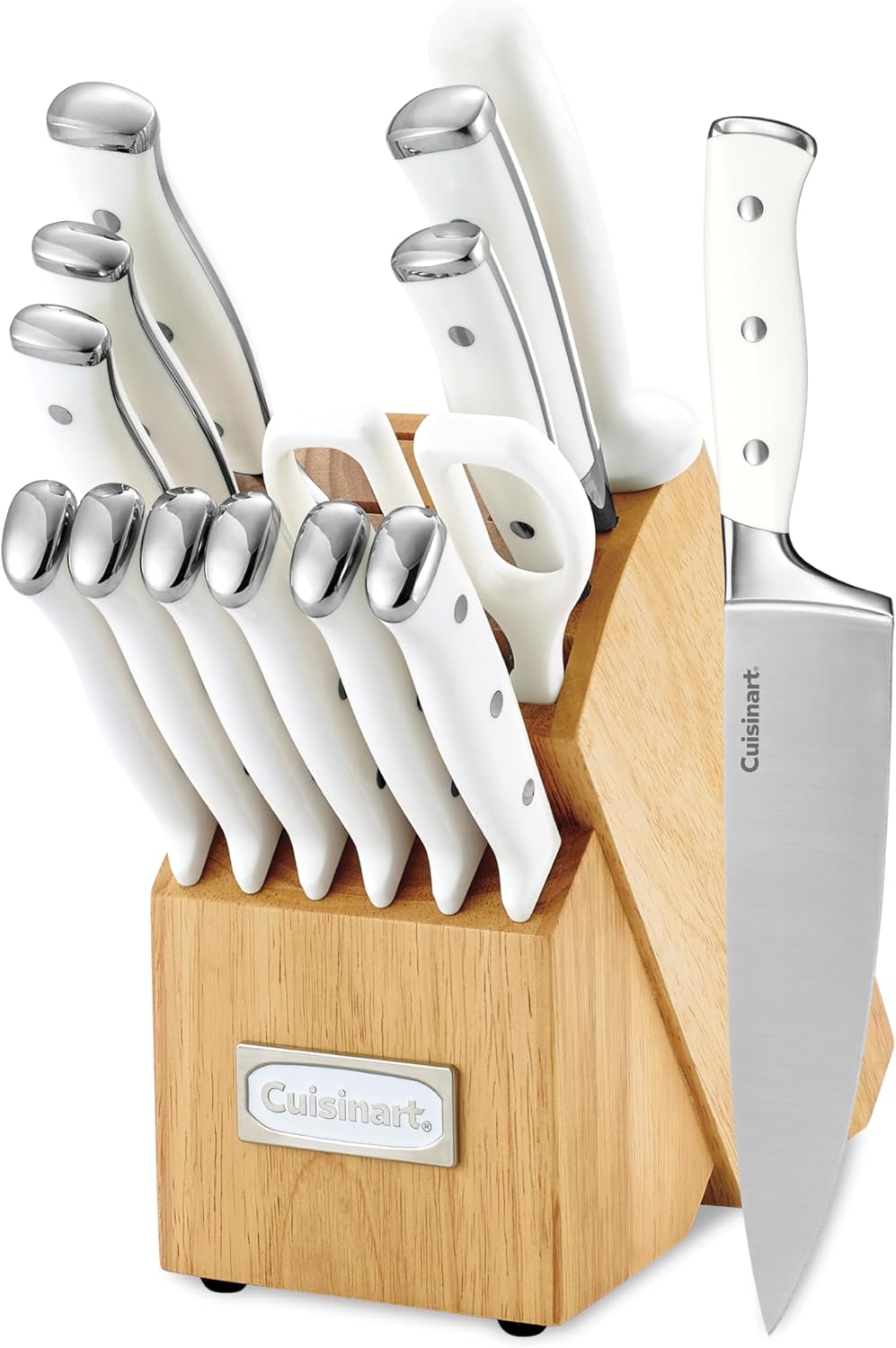
Cuisinart
Cuisinart 15-Piece Forged Triple Rivet Knife Set with Block
Check price
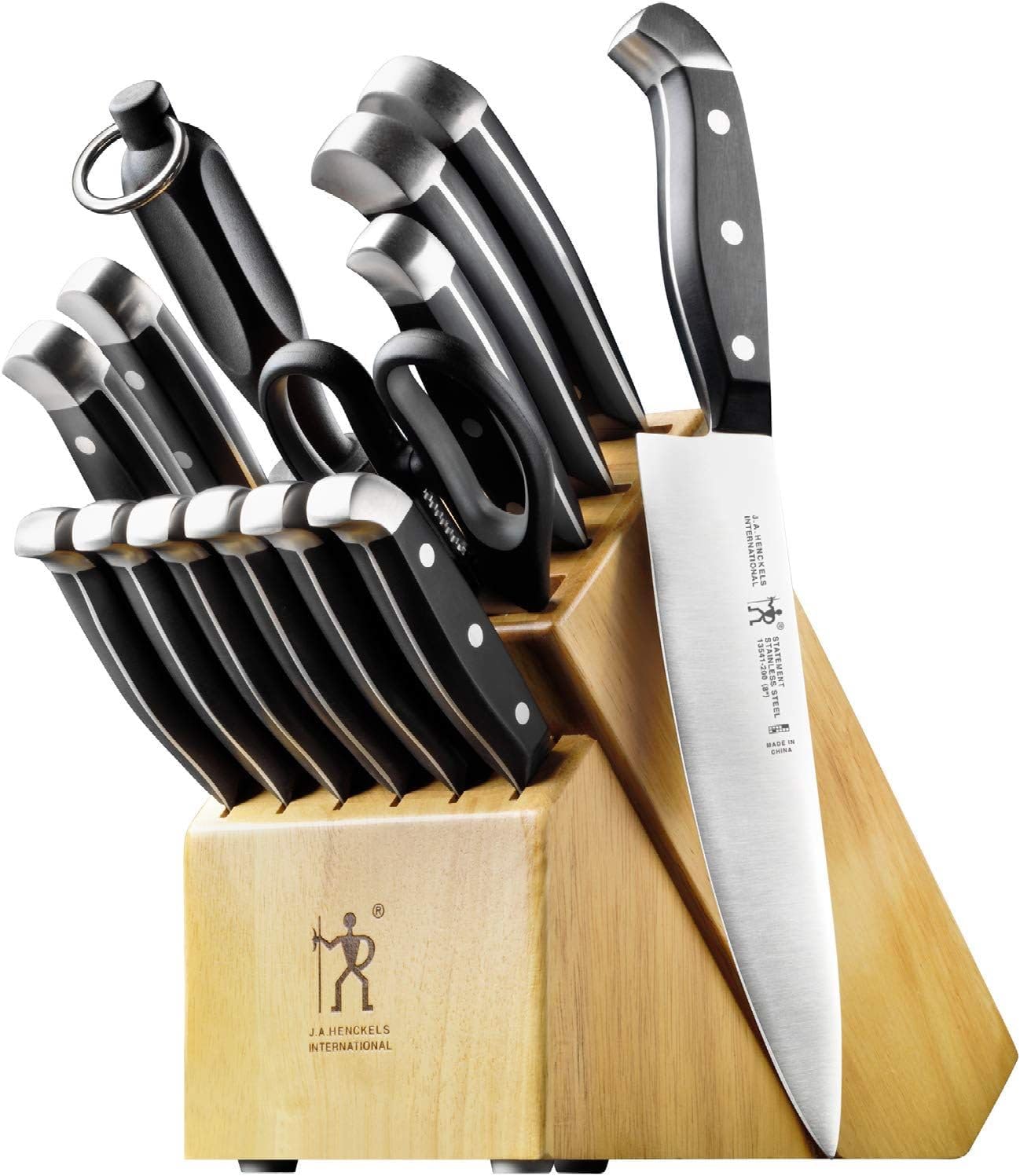
HENKCELS
HENCKELS Statement 15-Piece Premium Knife Block Set
Check price
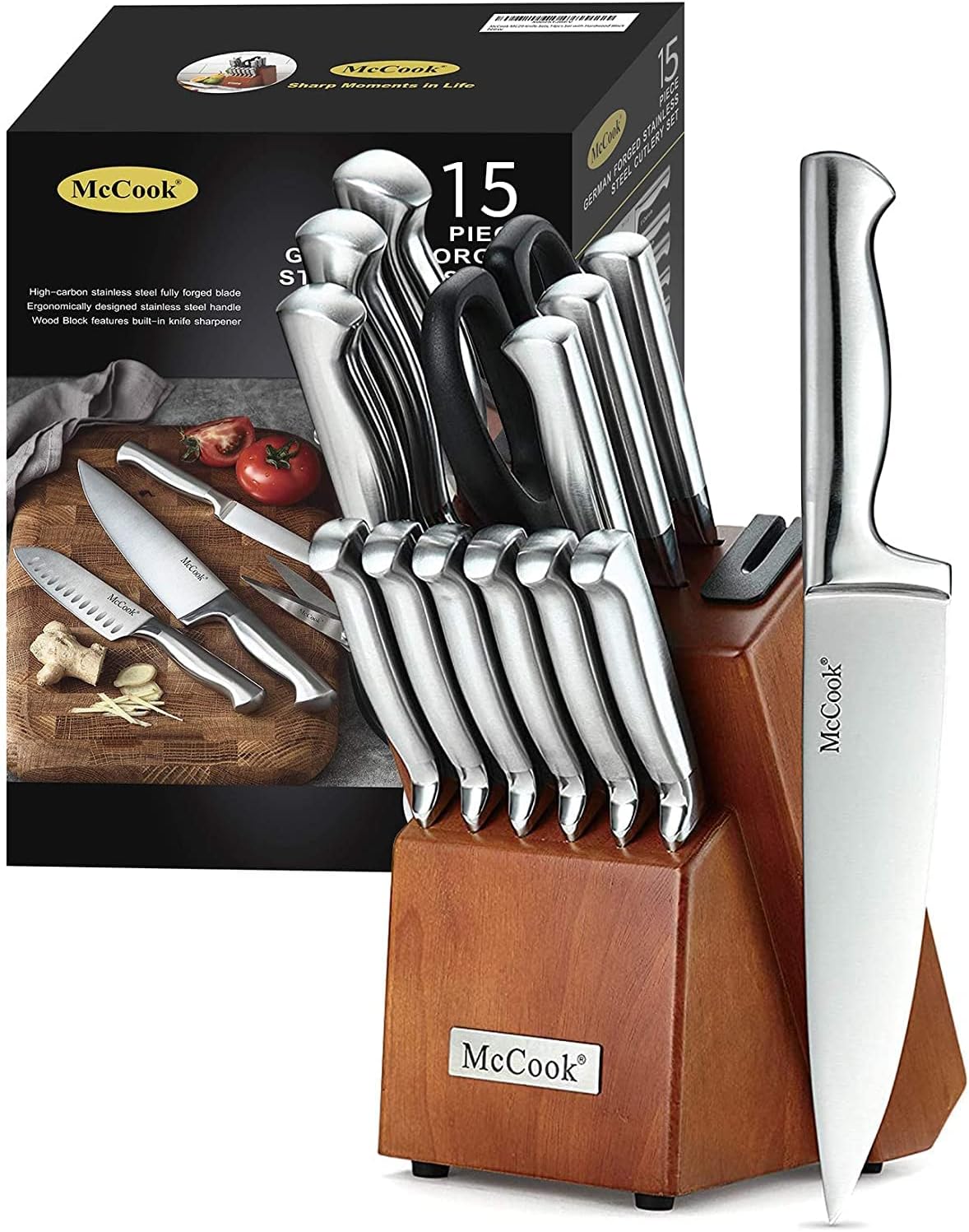
McCook
McCook German Stainless Steel Knife Block Set with Built-in Sharpener
Check price
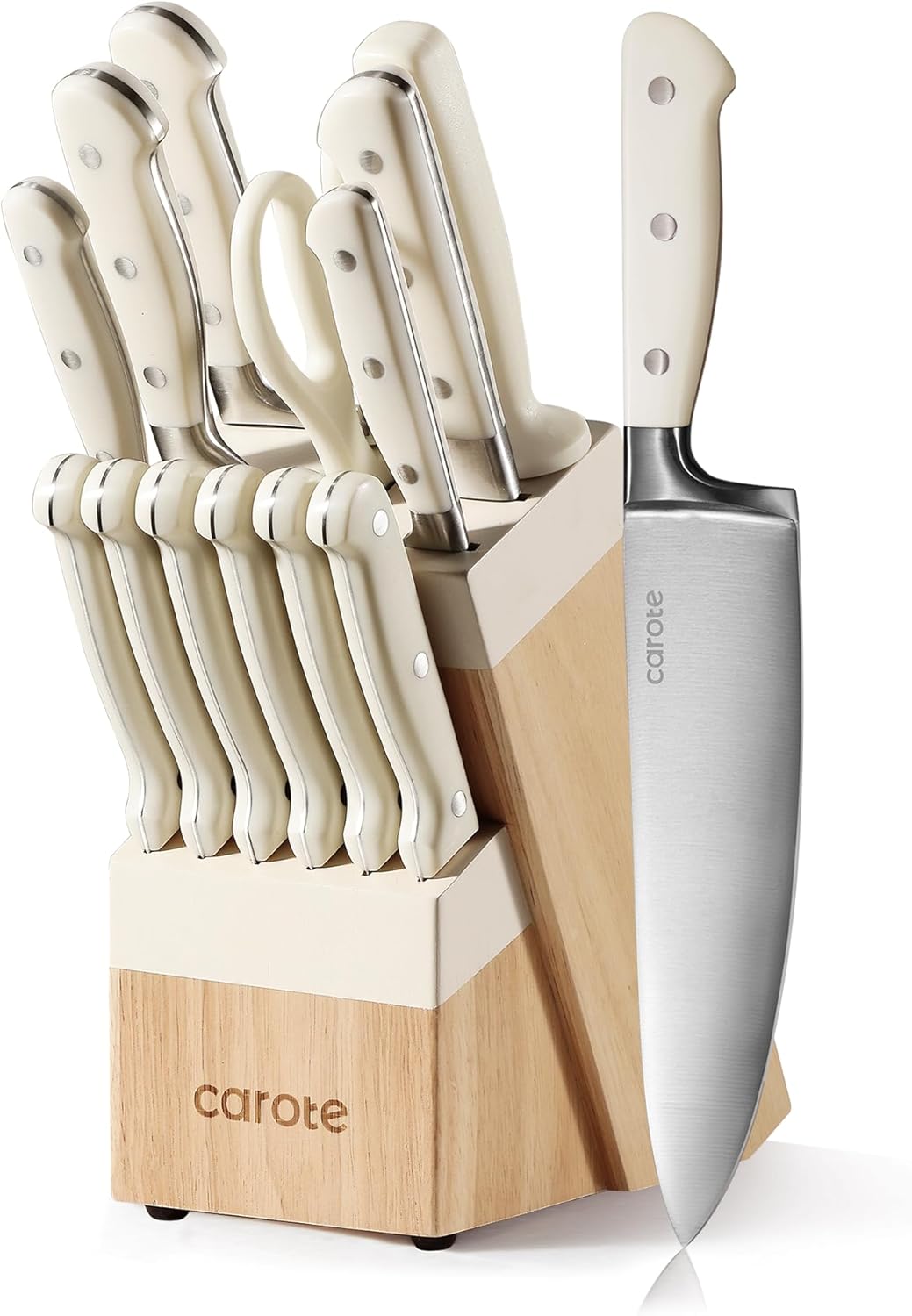
CAROTE
CAROTE 14-Piece Forged Stainless Steel Knife Set with Block
Check price
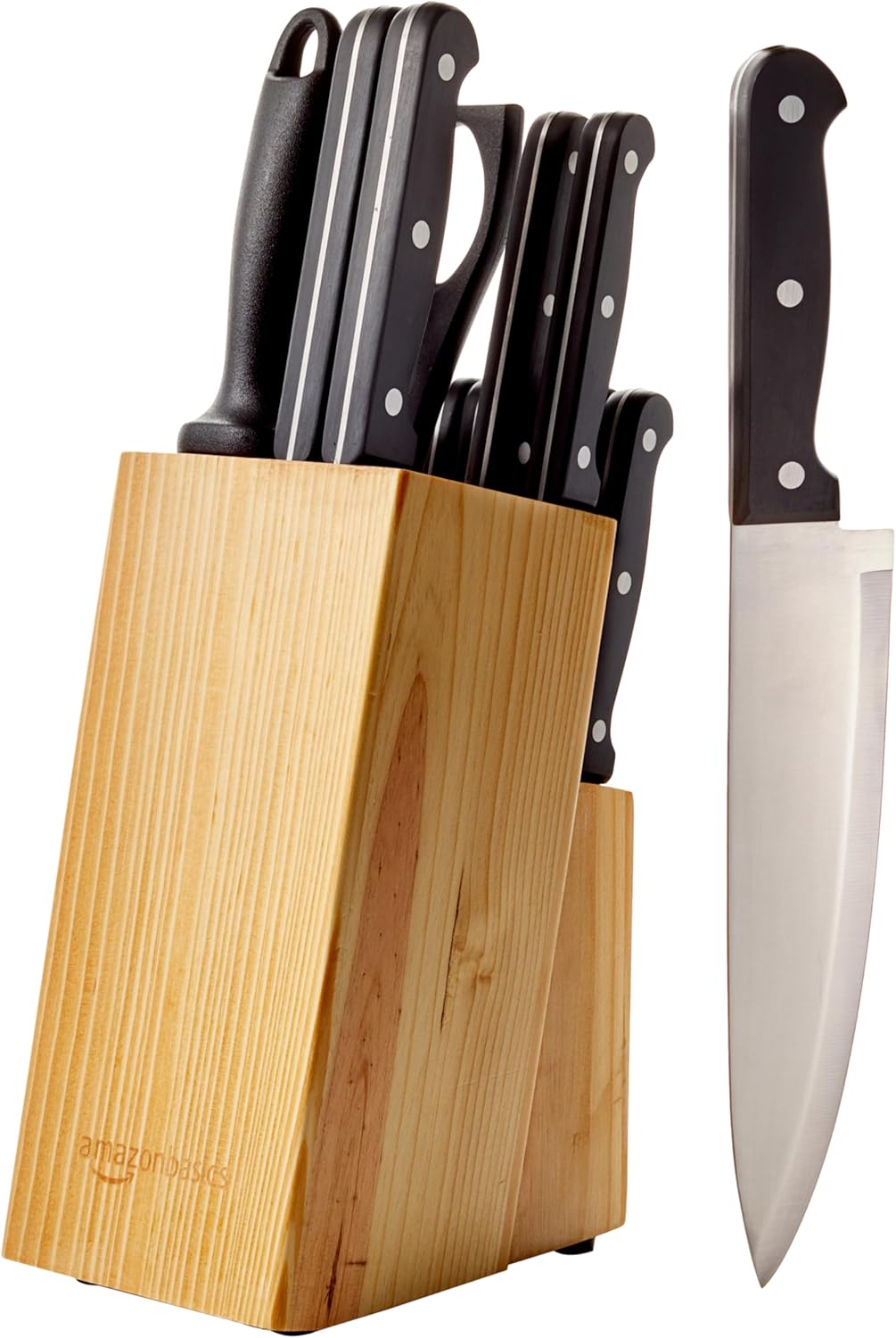
Amazon Basics
Amazon Basics 14-Piece High Carbon Stainless Steel Knife Set with Block
Check price
Frequently asked questions
Are knife block sets worth it or should I buy individual knives?
A curated block set (6 to 8 pieces) saves money and gives a matched look. Skip 15+ piece sets; they pad the count with stamped steak knives and shears you won't use.
German vs Japanese knives?
German: softer steel, heavier, forgiving, easier to sharpen, resists chipping. Japanese: harder steel, lighter, holds an edge longer, but chips if abused (freezer work, rocking on a bone).
Is full-tang construction important?
Yes for knives you'll use daily. Full-tang knives are balanced, sturdier, and last decades. Stamped knives (no full tang) work fine for paring and bread.